I wanted to talk to you about my kitchen scraps. I love pushing my limits in the culinary world, I’d even say surpassing them. My mind is constantly bubbling with creations, each crazier than the last. My refrigerator is a precious vault, safeguarding my little (and sometimes less successful) experiments.
One of the first vegetables to appear in spring is asparagus. This small, delicious spear is one of the earliest signs that warmer days are on their way.
From tip to end, it can be used in a thousand and one ways, each as delicious as the next, with little to no waste.
And just because it enriches our vocabulary, here are the proper names for the different parts of an asparagus:
The tip: the upper part, tender and flavorful.
The spear (turion): the name given to the young shoot—in other words, the entire asparagus.
The stalk: the elongated section that makes up most of the asparagus.
The heel or base: the lower part, commonly referred to as the asparagus tail.
The Tips: I usually snap them off and use them on their own. They are more delicate and don’t require much cooking time to be enjoyed.
They can be eaten raw, boiled, or even sautéed in a pan.
Add them to a salad, stir them into a risotto at the very end of cooking, or enjoy them on their own with a drizzle of olive oil and balsamic vinegar. In short, they are the little golden nugget of the vegetable—the most tender part.
The stalk, when freshly harvested, can be eaten raw, cut into pieces.
Grilled with a drizzle of oil, served with Parmesan shavings and a squeeze of lemon. Lightly steamed and served alongside soft-boiled eggs and a slice of ham…
Lacto-fermented at 3% salt with lemon slices so you can enjoy it throughout the summer. In short, the stalk is the most versatile part of the asparagus.
The tail or heel, this little part that we throw away without even thinking about it, is actually the star of the asparagus. To better understand, what we call the tail is the toughest part at the very end. If you hold the asparagus between your fingers closer to the bottom and, with gentle pressure, snap it in two, the smaller piece that remains is the one we’re talking about. That one! It’s this fibrous little end that we’ll carefully save and collect until we have a worthwhile quantity.
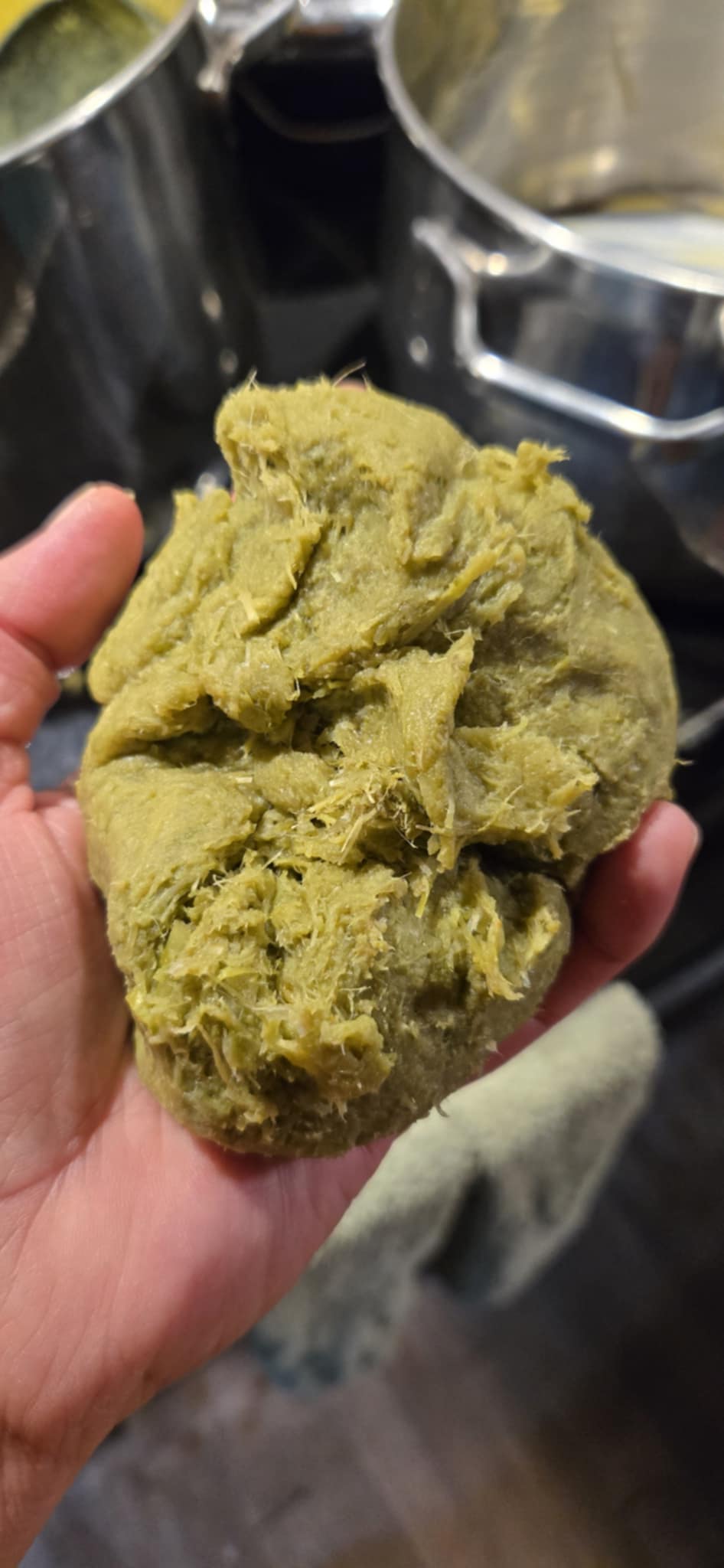
The cooking time is the same as for the stalk. Simply boil it for a few minutes with onions, garlic, herbs, and either vegetable or chicken bouillon cubes. Or, if you prefer, use only water and the asparagus ends. Bring to a boil for about 5 minutes. Remove from the heat and let cool slightly. Using an immersion blender, blend the mixture as thoroughly as possible. Be warned: asparagus ends are extremely fibrous, so this step requires a little extra effort, as the fibers will wrap around the blender blade and need to be removed throughout the process. (This can also be done with a food processor.) The goal is to extract as much flesh as possible while removing anything that might feel like chewing on a tree branch. Once the mixture has been fully blended, strain it through a cheesecloth to remove all the fibers—the so-called little bits of branches.
Keep going, you’re now 90% done with your mission.
Once the liquid has drained, squeeze the cheesecloth thoroughly to extract every last drop.
And there you have it!
The effort is significant, but the reward is just as great. You now have a wonderful base for a thousand and one delicious recipes.
As a bonus, you’ve recovered 100% of your asparagus and reduced food waste.😊
Follow me to discover the thousand and one ways you can use your asparagus broth 😉